GARDEN CITY, Kan. — Ashley Hurd, a Kansas mother of four, is cancer-free after an early diagnosis. Now she is watching artificial intelligence enter breast cancer screening, InvestigateTV reported.
Hurd expected a routine screening when she went for her first mammogram at the suggestion of her primary doctor. After numerous appointments, she was diagnosed with stage 1, HER2-positive breast cancer. Getting treatment meant traveling from her home in Garden City to the University of Kansas Cancer Center, more than 380 miles away.
“We would leave on Sunday night, drive that six hours, to Kansas City from our hometown, go to chemo the next morning at 6:30 a.m. for my labs, stay there all day, and then make that drive home so I could get back to work the next day and back home to our kids,” she said.
Her care included six rounds of chemotherapy with immunotherapy, a double mastectomy and reconstruction. She believes catching the cancer early is why she is still here.
A second set of eyes
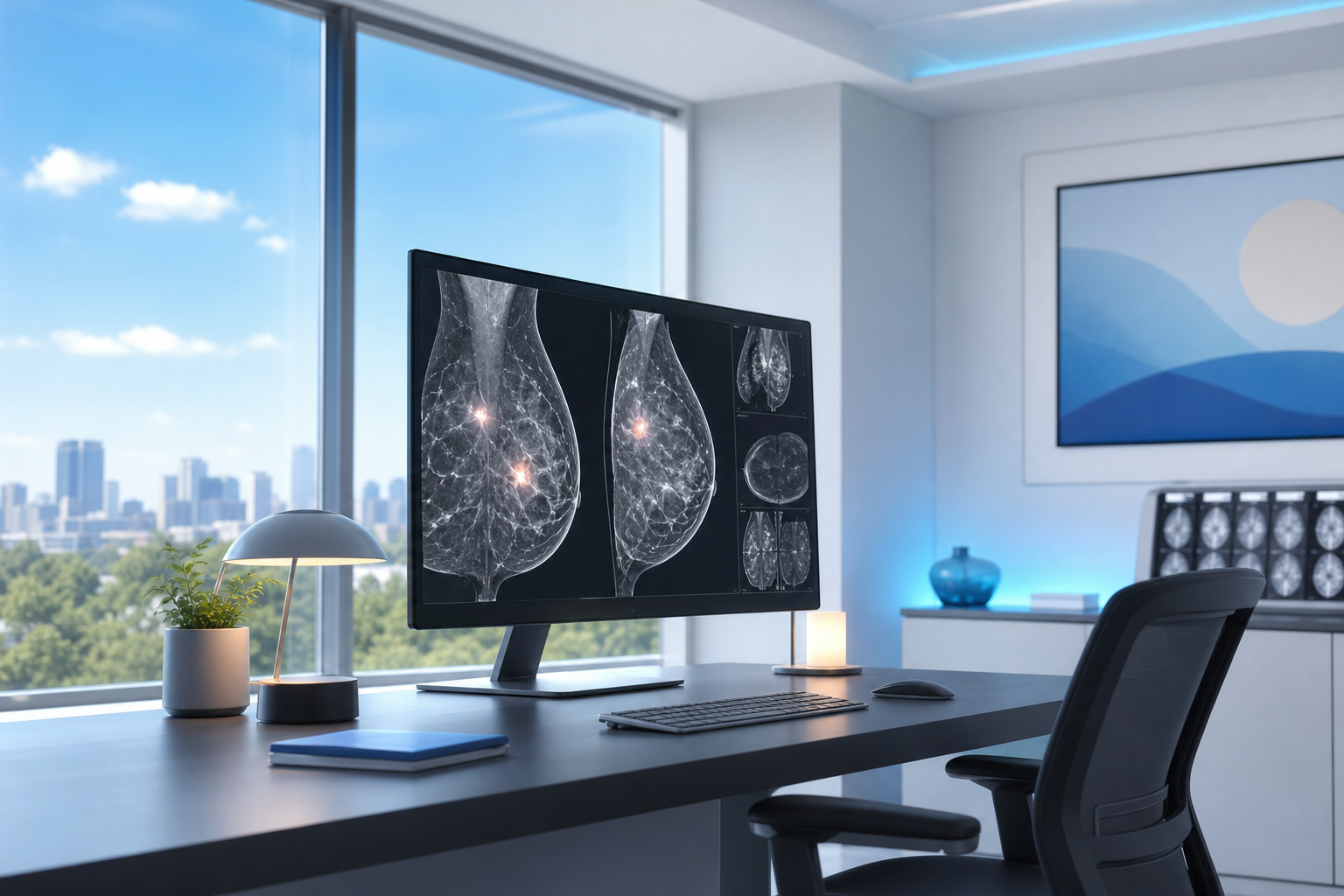
InvestigateTV reported that breast radiologists nationwide have already begun using AI to assist with reading breast images. The program examines each mammogram together with the radiologist and marks spots that could warrant further inspection, but making the diagnosis is not its job.
Dr. Onalisa Winblad, who leads breast imaging as division director at the University of Kansas Health System, said the tools generate a scorecard marking anything that looks abnormal. She said they can also point out lesions and other abnormalities, particularly when breast tissue is dense. She sees them as a way to help bridge the gap created by specialist shortages and hospital closures for women who travel far for care.
“No matter where you live or what resources you have, that really should not determine your survival from breast cancer.”
Winblad added that a radiologist still needs to grasp the meaning of the results and how the AI tool fits into the case.
A skeptic changes her mind
Dr. Janet Storella has spent more than three decades in the field and directs women’s imaging services for Community Radiology Associates at RadNet, working out of Maryland. She said she began as an “incredible skeptic” when asked to help develop AI projects.
Her view changed after she saw the results. In a yearly group of 1,000 screening mammograms, she said, the rate at which cancers are detected increased. Doctors at every experience level improved, she said, from veterans to those fresh out of training and from breast imaging specialists to general radiologists.
“It’s really like having my most trusted colleagues sitting next to me and helping me in decision-making,” Storella said.
InvestigateTV also cited research published in 2025 in the Journal of Clinical Medicine, which examined over 31,000 mammograms. Once a clinic brought in AI, its cancer detection rate climbed from roughly six per 1,000 screenings to roughly nine, and the number of cancers caught early also grew.
Open questions remain
InvestigateTV reported that researchers emphasize it has not yet been shown that AI-assisted mammography helps people survive. To date, the bulk of research looks only at the number of cancers detected and how early they are found.
“Humans make mistakes. AI makes mistakes. The question is, does AI make more mistakes than humans make? Does it make fewer mistakes? I don’t know the answer to that right now,” Storella said.
Erin Steigleder, who directs programs at the Virginia Breast Cancer Foundation, believes patients should realize that AI is a still-developing tool with flaws. “We are feeding AI images from past mammograms; however, the system is only as good as the images we feed it,” she said.
Technology with a human touch
Hurd sees a role for AI, particularly in rural communities where she says doctor shortages and thin staffing can slow the path to answers. It might have helped her in the uncertain early days, she said, when she did not know her next steps.
She wants it to support her doctors, not replace them. “I like that it can assist doctors, but I still very much want their expertise,” she said.
Today Hurd has returned to her job, goes to the gym to get away from it all, and has a checkup every three months. Some things, she said, are beyond software.
“I don’t think AI is able to give me a hug and tell me I’m going to be okay and that they’re going to be there with me,” Hurd said.
Storella agreed that the technology will not replace human qualities. She said it “certainly isn’t going to change the softer human skills of compassion and empathy.”
Originally reported by InvestigateTV.
Illustration generated by AI. It is not a photograph of the people or event in this story.